Table Of Content
This report also provides an initial evaluation of the status of deeper learning represented in both consortia’s plans. For more than 40 years, ACCSC has been at the forefront of establishing and advancing quality education at private, postsecondary career schools and colleges. First-term students learn practical foundation skills in design, color theory, typography, print production and basic drawing. Students in intermediate and advanced terms build on their foundation skills and use computer technology to produce design solutions for a wide variety of projects. Simply stated, Rotel provides the best value in affordable, high performance stereo and home theater components.
A Brief Guide to Balance — A Design Principle
The size of lines that are used in a design can also play a role in balance. Thicker lines usually feel heavier and have more visual weight than the thinner lines. So a designer would need to carefully calculate the right mix of thick and thin lines that they need to have in a design, to achieve the perfect balance. If a designer feels that none of these types of balance can help attain the intended effect, they can also experiment with off-balance designs.
Design Principles: Compositional, Symmetrical And Asymmetrical Balance
Often, pointed design elements or flowing lines serve to draw the gaze, and if implemented well, can also bring a good balance to the design on their own. This technique is especially good for those who want to attract the gaze without making their design heavy visually. Designers can also create balance by tweaking the shape of elements in a way that suits their preferred mode of visual balance. They might create a contrasting symmetry, or they might use different shapes to create an asymmetry that helps focus the gaze onto the main part of the design. Moreover, designers can also bring balance by incorporating small elements of warm tones with larger areas of cooler tones, or vice versa, to create a visual appeal. This will draw the eye to the focal elements without taking away from the image as a whole.
Running the analysis in R
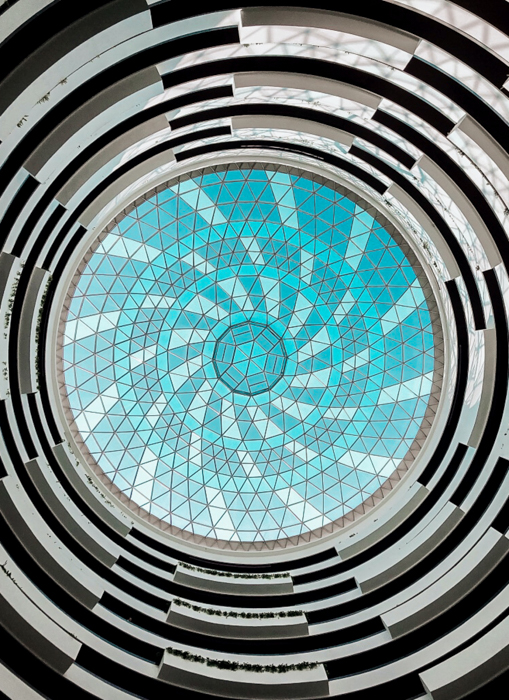
Only once you know how each of these concepts affects the balance of your design, will you be able to create flawless pieces of art including various types of logos. The arrangement of petals in a sunflower is the perfect example of radial symmetry. Other common examples in nature include the ripple in water, whirlpools, and the rings in a tree trunk. When there is balance in a design it is aesthetically appealing.

Balance in design refers to an even distribution of visual weight. A lack of balance can lead to visual tension, which can make or break a design. Balance can be achieved with symmetric, asymmetric, radial, or mosaic approaches.
Past Research Cycle Highlights - Auburn Engineering
Past Research Cycle Highlights.
Posted: Thu, 17 Jun 2021 23:51:08 GMT [source]
Considering visual weight
Customers can see the grid, even if there aren't any visible lines. Web pages are well suited to grid designs because of the square nature of web shapes. A designer can create balance by combining many complex shapes in a composition with a field that is flat or plain.
About the the Graphic Design Program
Designs with balance in them also manage to establish a clear focal point in the image and this can be useful in storytelling. Switch them around...now first fit treatments and then the blocks. We could select the first three columns - let's see if this will work. Click the animation below to see whether using the first three columns would give us combinations of treatments where treatment pairs are not repeated. However, this approach should be used with caution and should only be used when sample sizes are nearly equal to begin with.

Access this chapter
Beautifully Balanced Design Ideas to Steal from a Couple with Completely Opposite Decor Tastes - Apartment Therapy
Beautifully Balanced Design Ideas to Steal from a Couple with Completely Opposite Decor Tastes.
Posted: Tue, 15 Mar 2016 07:00:00 GMT [source]
Do you want to know how to turn a good design into something spectacular? It is one of the most crucial elements of art that works wonders in graphic design. If you want your marketing materials and visual assets to go from ho-hum to wow, follow the tips we list here.
Yet it also requires the addition of a larger area of flat, non-textured surface to have the desired impact visually. That, and the required addition of other design elements, is often why this is considered one of the hardest elements to tweak. Knowing the types of balance is just one part of the battle in implementing your choice of balance in design. You also need to know about the different elements and techniques which can be used to create your preferred balance. You often see pages where the eye automatically flows from text to image and back to text smoothly.
The texture of an element can determine whether it has a strong visual weight or it appears light. But then if you use too many textures, there is nothing but chaos. Any design that does not deliver good user experience is bad design. So, you have heard enough about why balance is important.
The idea of balance has been observed even in prehistoric and early art forms. However, the concept gained formal recognition thanks to artists who worked in the Renaissance period. And this isn’t limited to designs with large dimensions vs. small ones. Minitab’s General Linear Command handles random factors appropriately as long as you are careful to select which factors are fixed and which are random. You can obtain the 'least squares means' from the estimated parameters from the least squares fit of the model. Statology is a site that makes learning statistics easy by explaining topics in simple and straightforward ways.
As mentioned earlier, balanced designs are preferred because they offer higher statistical power and more reliable test statistics. There are tons of reasons why an experiment may suddenly become an unbalanced design. The power of an ANOVA is highest when sample sizes are equal across all treatment combinations.
For example, you might have a large element placed very close to the centerline of the design. To balance it asymmetrically, you might have a small element farther away from the centerline. If you think of your design as being on a teeter-totter or seesaw, a lighter element can balance a heavier one by being further away from the center of gravity. You can also use color or texture to balance an asymmetrical design. The creativity here is more unanticipated and so, it also generates more interest than in the case of the simple symmetrical balance. Below is an example of an asymmetrically balanced logo.